
Strike #1: Asphalt Bluff South
Most project announcements in this space come before the hard work begins. This one comes after.


If you’ve been following along, you know we’ve been pointing at something. Site selection. Resource characterization. Process engineering. Legal structure. The kind of project development that holds up under scrutiny — and that takes as long as it takes. We’re not here to hype a concept. We’re here to tell you what we’ve built.
The Site
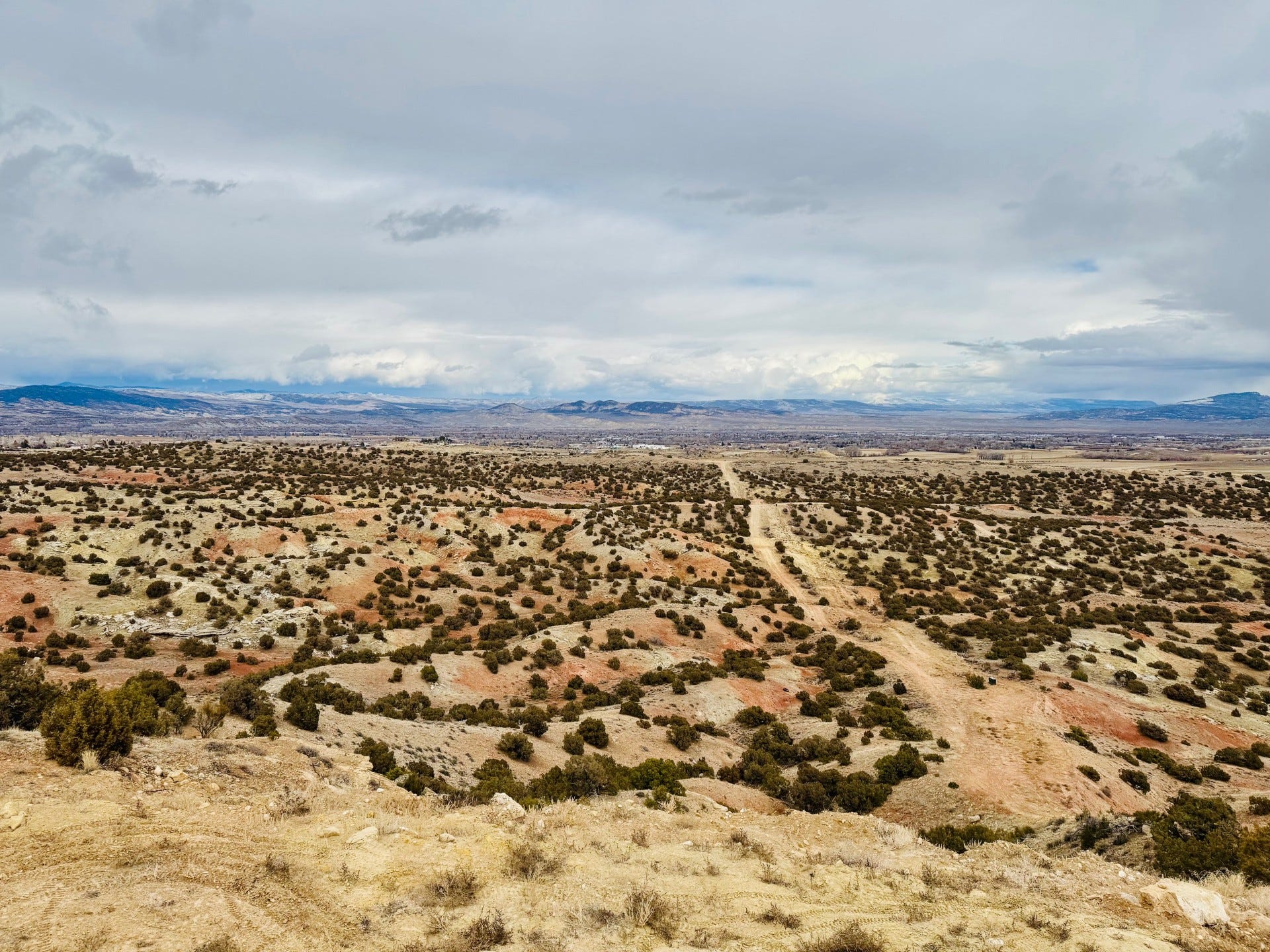
Strike #1 is Asphalt Bluff South (ABS) — a contingent resource bitumen deposit located approximately 6.5 miles southwest of Vernal, Utah (T5S, R21E, Section 5, SLB&M), held under SITLA lease by Valkor Energy Holdings. The deposit sits in a well-characterized bitumen formation in the Uinta Basin, with independently certified contingent oil resources from 0–300 feet of depth accessible via conventional open-pit mining techniques. Once extracted and processed, the bitumen yields two primary products: low-carbon asphalt binder and diesel. The high estimate (3C) for this development interval is approximately 20 million barrels; the full low-to-high resource range (1C–3C) will be presented in offering documents. The contingent resources have been certified by Netherland, Sewell & Associates, Inc. (NSAI) under the 2018 Petroleum Resources Management System (PRMS) as of March 2026.
These resources are classified as contingent pending project financing, facility construction, and commitment to develop — the exact milestones this offering is designed to resolve. It is also worth noting that NSAI has certified substantial additional contingent resources below 300 feet at ABS, representing a meaningful long-term play beyond the scope of the initial development interval.
The Commodity
America’s asphalt supply chain is under more pressure than most people realize. Asphalt binder represents just 2% of typical refinery output — when refineries close because gasoline economics no longer pencil out, asphalt supply disappears as collateral damage. That process is already underway: major refinery closures across the West Coast, Gulf Coast, and Midwest are removing hundreds of thousands of barrels per day of capacity, with industry analysts projecting continued reductions through 2045.
Meanwhile, demand isn’t going anywhere. The U.S. has over 4 million miles of paved roads — 94% asphalt — with $124.8 billion in public highway construction expected in 2025 and a $684 billion infrastructure funding gap through 2033. We are not facing declining demand for asphalt. We are facing stable demand colliding with structurally tightening supply.
Unlike refinery-derived asphalt, Valkor’s model produces low-carbon asphalt binder and diesel directly from the ore — no refinery required. That distinction matters: when the industry’s own leading energy research firm calls for “new dedicated binder production capacity,” this project is a direct answer to that signal. For a deeper look at the supply dynamics, see Matt’s analysis: “Why Asphalt”.
The Facility
The production target is 2,500 barrels per day of bitumen – resulting in the primary low carbon asphalt product with associated diesel range organics. This facility is a 5× scale-up of Valkor’s AR Pioneer facility, which is currently under construction and advancing toward commissioning later this year. The process technology is Valkor’s proprietary, patent-pending solvent extraction system, engineered for Uinta Basin bitumen.
The ABS project is currently in the Project Definition phase, with CAPEX and OPEX estimates under active development to support facility design and investor-grade documentation.
The Framework
AetherStrike was built around a single premise: that the capital formation model for resource development is broken, and that fractional ownership of independently certified reserves — structured as a security, held in a purpose-built SPV, and settled on-chain — can change that. Strike #1 is where that premise meets the ground. The contingent resources at ABS are NSAI-certified. The extraction technology is Valkor’s proprietary, patent-pending system, engineered specifically for this basin. The instrument designed to give investors access to those resources is a DRRU issued by the SPV — representing a direct fractional interest in the certified contingent resources themselves.
We are not announcing an offering today. We are announcing the project.
For qualified investors who want to understand the structure, the economics, and the path to production — that conversation is available through our formal process. Nothing in this announcement constitutes an offer to sell or a solicitation of an offer to buy any security. Any offering will be made only to eligible investors pursuant to applicable securities laws and through definitive offering documents.
What Comes Next
The SPV will prepare offering documentation and conduct a capital raise designed to fund construction and put Strike #1 into production — and in doing so, convert these contingent resources into producing reserves.
We’ll have more to say as each milestone is reached.
If you want to be informed — not pitched, informed — you can register your interest below to receive updates from AetherStrike on project developments.
Visit https://aetherstrike.com/strikes to learn more.
Registration does not constitute participation in any offering and does not establish any relationship with the issuing SPV.
This communication is for informational purposes only and does not constitute an offer to sell or a solicitation of an offer to purchase any security. Any offering of securities will be conducted only in accordance with applicable federal and state securities laws, and only to investors who meet applicable eligibility requirements. Contingent resource estimates have been prepared by Netherland, Sewell & Associates, Inc. in accordance with the 2018 PRMS definitions and guidelines. Contingent resources are not reserves; they are subject to contingencies including securing project financing, construction of production facilities, and commitment to develop the resources.